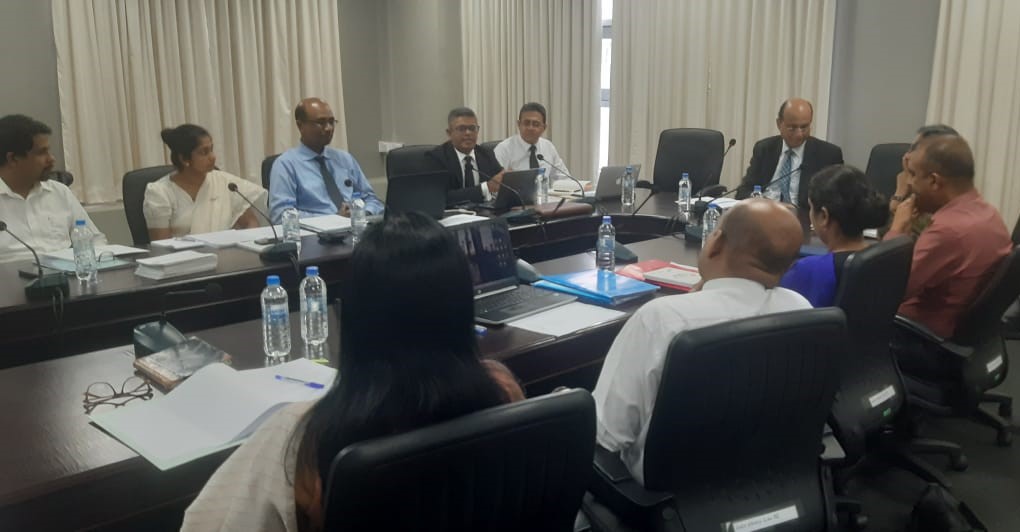
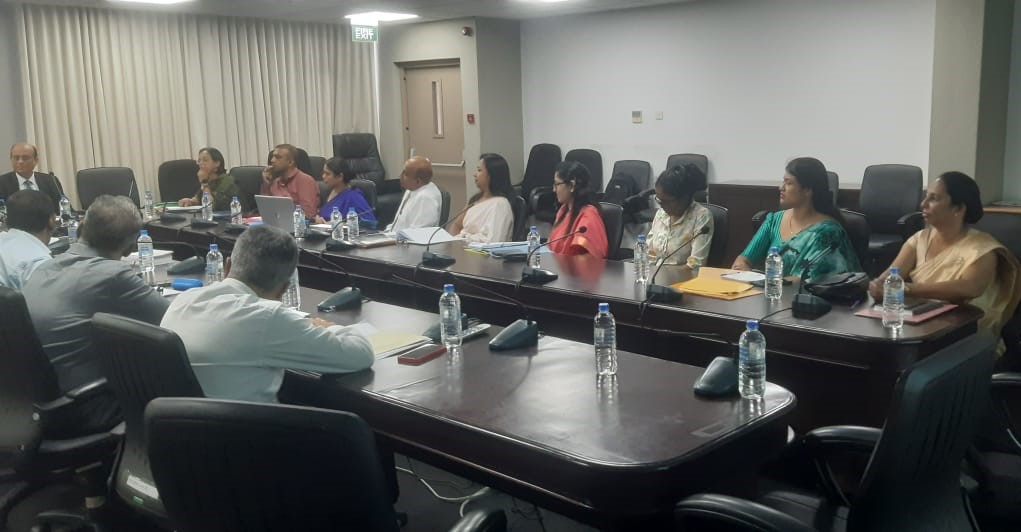
National training course on radiation protection for operators/users in Category III and IV industrial facilities 24-26 June 2024
The Sri Lankan Atomic Energy Regulatory Council (Council) is conducting the “National Training Course on Radiation Protection for Operators/Users Working in Category III and IV Industrial Facilities” from June 24th to 26th, 2024. Lectures and exercises will be led by Council officers.
The purpose of this training course is to qualify operators and users in radiation protection. At the end of the three-day training, there will be an examination. Those who pass the examination will be awarded certificates valid for four years.
The objectives of the training course are as follows:
To use the training certificate to fulfill the regulatory requirement for radiation protection training needed for appointment as an operator/user.
To gain a better understanding of the philosophy and principles of radiation protection.
To understand regulatory requirements and the international system of radiation protection.
To comprehend the practical aspects of protecting workers and the general public.
To develop a safety and security culture among radiation workers.
To learn emergency response procedures for radiological emergencies.
To learn the correct procedures for radiation protection when dealing with ionizing radiation sources.
To acquire techniques and proper procedures for controlling radiation exposure to the public and workers.
To gain a better understanding of the security of radioactive materials and the safe and secure transport of these materials.
To understand waste management procedures.
The Council conducts similar training courses every year to ensure workers obtain the necessary qualifications in radiation protection. After 2025, only workers who have obtained these certificates will be authorized under the licence’.
Bilateral Meeting with IAEA to review new Nuclear Law
Nuclear energy has emerged as a contentious issue globally in recent years and considered as a potential solution to pressing energy security and climate change concerns. Around the world, most of the states are struggling with the complexities of nuclear energy adoption, balancing its potential benefits against the inherent risks and challenges. The installation of a nuclear power plant in Sri Lanka also has been debated for decades due to its risks.
However, Sri Lanka is in the process of developing its nuclear infrastructure, led by the Sri Lanka Atomic Energy Board (SLAEB) and the Sri Lanka Atomic Energy Regulatory Council (SLAERC), focusing on capacity development and other areas, including regulatory aspects such as the establishment of new legislation and the expansion of regulatory infrastructure, including safety, security, safeguards, and liability.
The Cabinet of Ministers has already granted approval, dated February 12th, 2024, for 'Taking of Strategic and Visionary Decisions required for Electricity Generation by using Nuclear Power as a safe, clean, reliable, affordable, and green Energy Source and its formal planning in Sri Lanka.
In this Cabinet approval, the following recommendations were made:
To provide the strategic and visionary decision of the Government of Sri Lanka on the generation of electricity from nuclear power as a policy.
To invite Expressions of Interest (EOI) in accordance with the Standard Procurement Methodology of the Government of Sri Lanka from government institutions of suitable countries producing nuclear power plants compatible with the technical, economic, social, environmental, and legal conditions in Sri Lanka. These institutions should be able to provide an integrated solution, including nuclear fuel cycle options and radioactive waste management options.
To prepare the legal framework by approving a new act with updated provisions related to the process of generating electricity from Nuclear Power, replacing the currently implemented Atomic Energy Act No. 40 of 2014.
To approve the report consisting of the recommendations and suggestions of the International Atomic Energy Agency (IAEA), which was prepared based on the pre-feasibility study report.
Additionally, the Cabinet of Ministers granted approval dated March 4th, 2024, for the following:
To invite government institutions as well as private institutions of suitable countries producing nuclear power plants compatible with the technical, economic, social, environmental, and legal conditions in Sri Lanka, which can provide an integrated solution including nuclear fuel cycle options and radioactive waste management options.
To direct the Secretary, Ministry of Finance, Economic Stabilization & National Policies to appoint a Cabinet Appointed Negotiation Committee (CANC) and Project Committee (PC) in this regard.
In accordance with the above decision, SLAERC has the responsibility of developing and expanding its regulatory infrastructure by establishing a new Act, regulations for the use of nuclear power, human resource development, and development in the areas of safety, security, and safeguards to enable any party to establish a nuclear power plant in Sri Lanka.
Following above decisions, in year 2023, Committee for the amend or to draft new Act was nominated and appointed by Dr. Wijeyadasa Rajapaksha, Minister of Justice, Prison Affairs and Constitutional Reforms by letter dated 07.09.2023. According to that, inaugural meeting of the Atomic Energy Law Review Committee was held on 04.10.2023 chaired by the Hon. Sobitha Rajakaruna, Judge of the Court of Appeal. The Committee was consisted with 21 persons who are experts in the field of Legal and Regulatory matters
IAEA Legislative Assistance Mission to Sri Lanka: Awareness Meetings and National Workshop on Nuclear Law held on 13-17 November 2023 with the participation of IAEA experts, Committee members and personnel from Ministries.
The regulatory part of the new nuclear Act has been drafted by the technical team comprising seven members including Mr. Saminda Jayasekara, Chairman, Mr. Kapila de Silva, Director General, Mr. Prageeth Kadadunna, Director, Mr. Sumith Kumara, Mr. Neel Fernando, MS. Chamini Herath, Deputy Directors and MS. Navodya Dissanayake, Legal Officer of Sri Lanka Atomic Energy Regulatory Council. Mr. S.R.D. Roza, Chairman and Mr. Malinda Ranaweera, scientific Officer of Sri Lanka Atomic Energy Board (SLAEB) lead the team to draft second part which related to the duties and functions of SLAEB.
The drafted technical document was reviewed for legal terms by Hon. Sobitha Rajakaruna, Judge of the Court of Appeal, Ms. Chathuri Kapurubandara, Assistant Legal Draftsman and Ms. Deepthika Damayanthi Kulasena, Consultant to the Legal Draftsman of Legal draftsman Department, Ms. Yuresha De Silva, Deputy Solicitor General, Attorney Generals Department, Ms. Tilainie De Silva, Head of Legal Division, Ministry of Foreign Affairs and Mr. Jagath Wickrmanayake - President’s Counsel (Independent drafting expert).
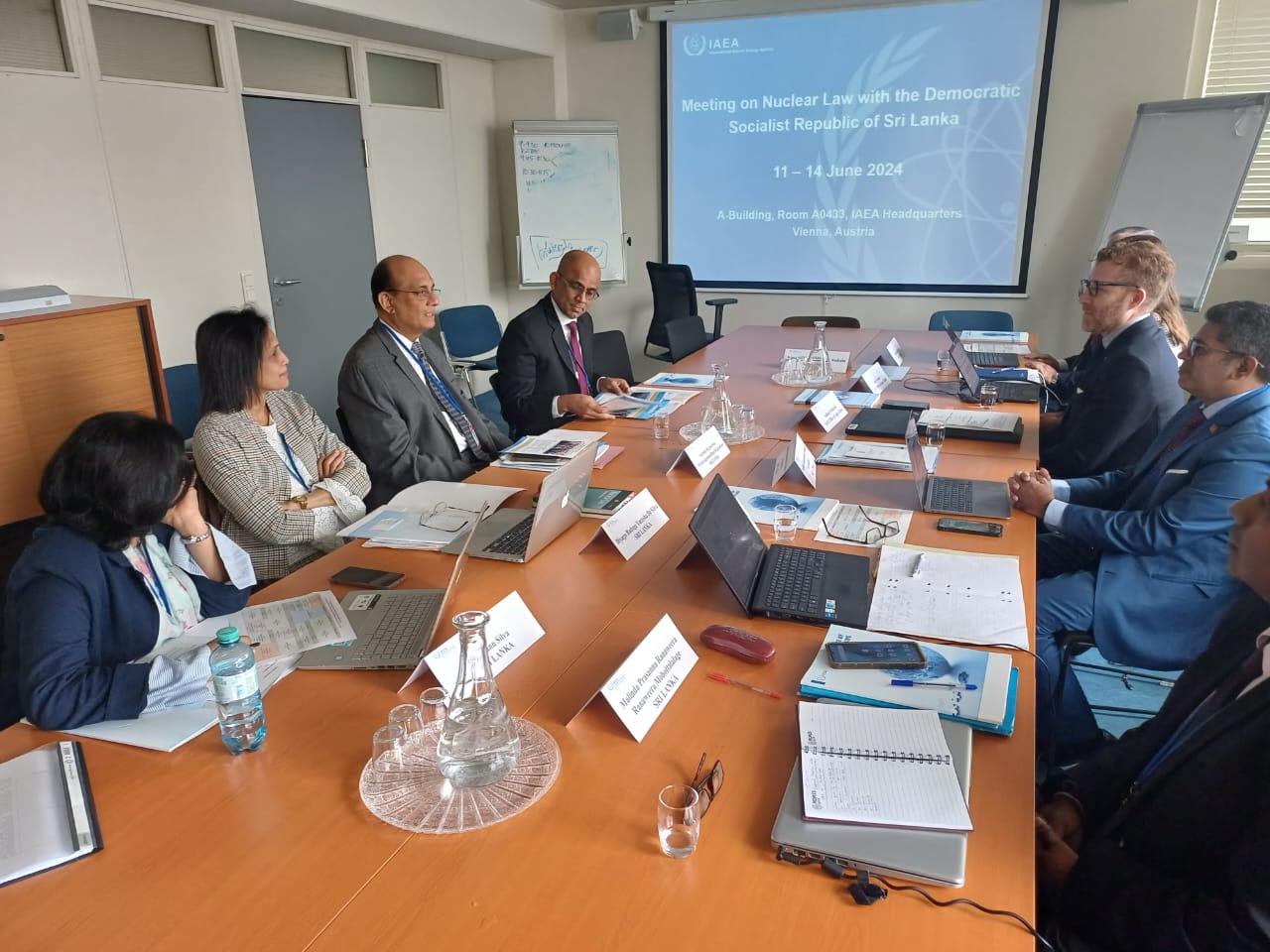
As we embark on the drafting of this crucial legislation, The International Atomic Energy Agency (IAEA) support is of utmost importance to finalize the Act. Therefore, the International Atomic Energy Agency (IAEA) has initiated preliminary discussions for drafting the Act with technical team members and agreed upon dates to finalize the draft Act in Vienna by participating in several IAEA experts in different fields. The IAEA has requested to send ten local experts who are involved in drafting the Act and the decision-makers to finalize the draft Act during the period of 11-14 June 2024. This is in accordance with the time plan agreed during the IAEA legislative assistance mission in Sri Lanka from 13-17 November 2023.
Accordingly, the drafted new Nuclear Act was reviewed by the IAEA experts and Sri-Lanka bilateral legislative drafting meeting will be held on 11-14 June 2024 at IAEA Headquarters in Vienna, Austria brought together a delegation of ten Sri Lankan officials who involved preliminary drafting and decision making.
Original team to be participated to the meeting approved by Secretary of Ministry of Power & Energy is as follows:
Hon. Justice Shobitha Rajakaruna - Judge (Acting President) of the Court of Appeal
Mr. A.K. Wickramasinghe - Additional Secretary, Ministry of Power and Energy
Mr. Saminda Jayasekara - Chairman, Sri Lanka Atomic Energy Regulatory Council
Mr. K.K.P.I.K. Kadadunna - Director, Sri Lanka Atomic Energy Regulatory Council
Mr. K.S.S. Kumara - Deputy Director, Sri Lanka Atomic Energy Regulatory Council
Ms. Deepthika Damayanthi Kulasena, Consultant to the Legal Draftsman, Legal Draftsman Department
Ms. Yuresha de Silva – Deputy Solicitor General, Attorney General’s Department
Mr. Malinda Ranaweera - Senior Scientific Officer, Sri Lanka Atomic Energy Board
Mr. Jagath Wickrmanayake - President’s Counsel (Independent drafting expert)
Ms. Thilani Silva - Head of Legal Division, Ministry of Foreign Affairs
However, due to official matter, Ms. Deepthika Damayanthi Kulasena, Consultant to the Legal Draftsman, Legal Draftsman Department will not join the meeting in person. Therefore, total number of delegations to the meeting is nine representatives.
The key objective of this meeting is to ensure that drafted nuclear Act aligns with the international standards and best practices and how they align with national needs. The IAEA experts provide feedback and guidance to achieve this goal. The engagement with IAEA experts remark a significant step forward in Sri Lanka's journey towards establishing a strong and effective nuclear regulatory framework.
The Article published by the IAEA can be viewed here
Nuclear or Radiological Emergency Exercise (Web Based)- Convention Exercise (ConvEx-2e)
Convention exercises are conducted by the International Atomic Energy Agency (IAEA) to test the preparedness capabilities of member states for responding to nuclear or radiological emergencies and to test IAEA tools in emergency response. ConvEx 2(e) is the exercise designed to test IAEA tools applied to scenarios occurring in member states. Therefore, the IAEA invited Sri Lanka to host this exercise due to a long partnership in this area, and Sri Lanka has done tremendous work in relation to nuclear or radiological emergencies. As a competent authority, the Sri Lanka Atomic Energy Regulatory Council (SLAERC) accepted the invitation. Consequently, the IAEA, in collaboration with the SLAERC, organized a ConvEx-2e exercise on February 22, 2024. The primary objective of this exercise was to assess and test the IAEA's assessment and prognosis tools used to analyze nuclear or radiological emergencies.
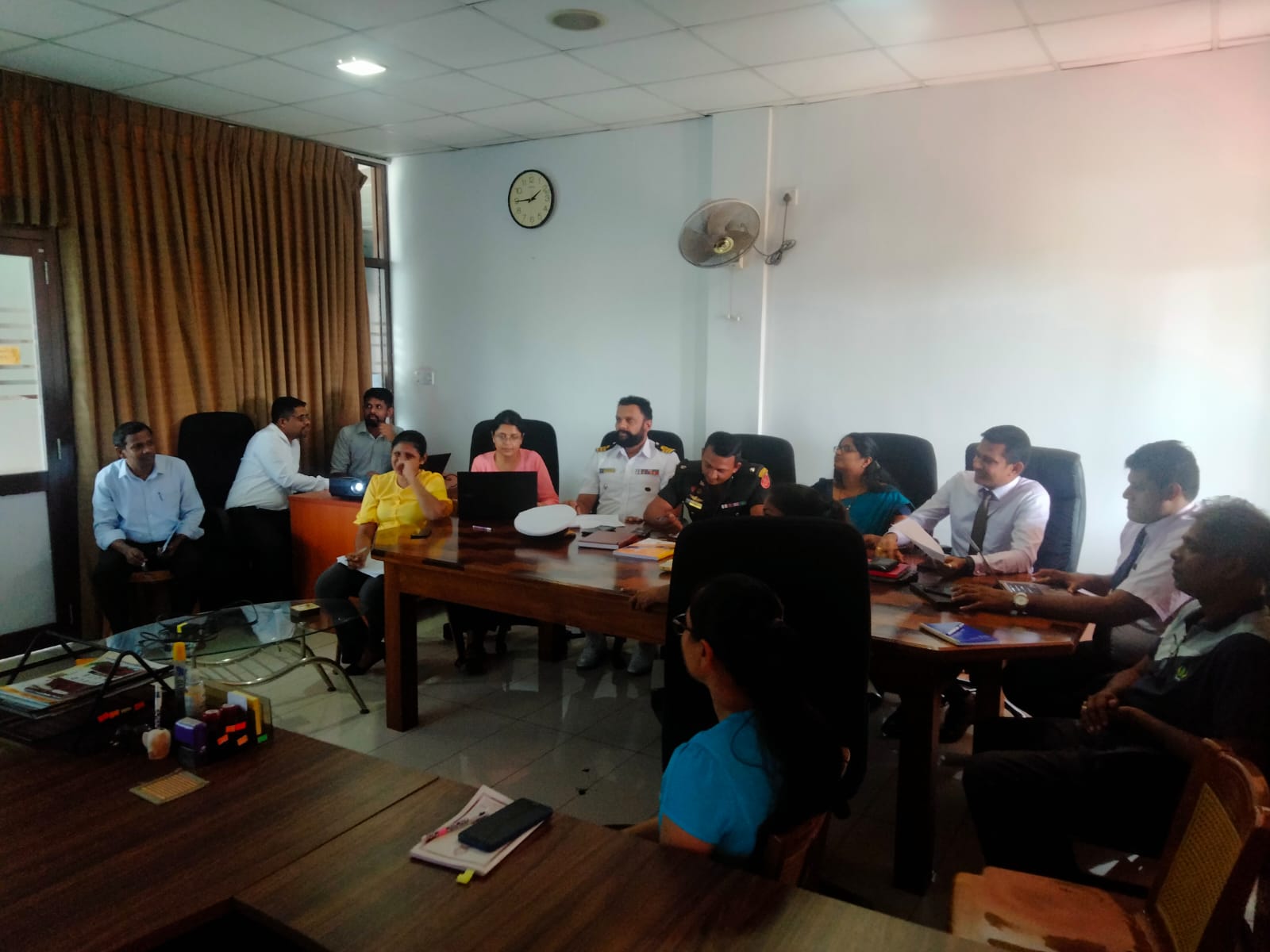
The simulation involved a hypothetical scenario developed by the IAEA, consisting of a Radiological Dispersal Device (RDD) attack in the Colombo Railway Station, encompassing interactions through emergency communication channels. Participants were required to answer the questions asked by IAEA technical teams after submitting injects with the responses. The exercise was conducted online through the IAEA USIE platform, with the Sri Lankan team from the following stakeholder organizations invited by SLAERC to participate in the exercise. All participants gathered at the SLAERC premises and responded to the IAEA through the web platform after discussion. The invited parties are:
Ministry of Health (Disaster Preparedness and Response Division)
Sri Lanka Atomic Energy Board
Sri Lanka Army
Sri Lanka Navy
Sri Lanka Air Force
Sri Lanka Police
Based on the inputs given by the Sri Lankan team regarding the accident scenario, the IAEA technical teams evaluated our emergency preparedness and response capabilities and provided their summary and evaluation report, including recommendations and feedback regarding the event. Mr. Prageeth Kadadunna, Director (Inspection & Enforcement) and National Emergency Coordinator, was the main counterpart of this exercise, and Mr. Jayantha Premakumara, Senior Scientific Officer, and Mr. Malinda Piyarathna, Scientific Officer, worked as coordinators of this exercise. Group leaders of SLAERC Emergency Response teams, along with their members and other participated stakeholders provided their valuable expert ideas to ensure the success of the event